




When electricity becomes expensive, competition becomes inevitable. But when consumers don't know their alternatives, who really wins?
Editorial note
The reported price reductions at the centre of this piece have not been independently verified against a complete product-by-product price list.
Imagine having a great business idea, a product people need and customers willing to buy. But you cannot operate consistently because electricity is unreliable, and the cost of keeping your business running keeps increasing.
For millions of Nigerians, this isn't an imaginary situation. It's business as usual.
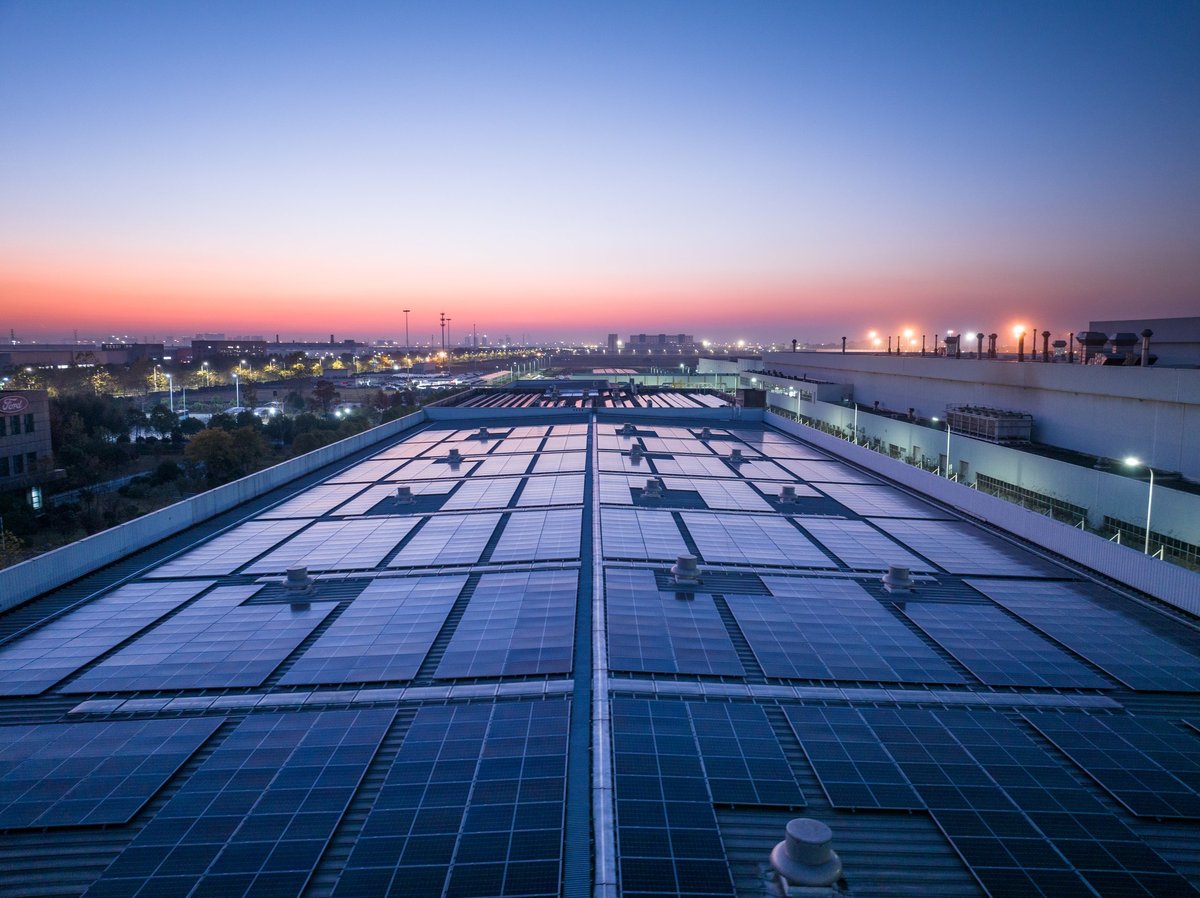
Nigeria's electricity crisis has created an alternative power economy. Households, entrepreneurs and established businesses are increasingly investing in inverters, lithium batteries, solar panels and portable power stations.
But an important question is emerging:
Should reliable electricity be a privilege reserved for those who can afford it, or should competition make it accessible to more people?
This takes us into an interesting intersection of capitalism, socialism, market competition and consumer awareness.
Capitalism encourages businesses to innovate, invest, compete and generate profits. It gives entrepreneurs the freedom to introduce products, determine prices and build sustainable businesses.
But there is a difference between making a product available and making it affordable.
According to the International Energy Agency's Electricity 2026 report, Nigeria had 13.6GW of installed grid-connected generation capacity, yet average dispatch availability was only 5.4GW during the first half of 2025.
The agency also forecasts average annual solar PV generation growth of 75% between 2026 and 2030.
The message is clear: alternative energy is becoming increasingly important to Nigeria's electricity future.
Read the International Energy Agency's Electricity 2026 report.
Against this backdrop, the recent public competition between VeryDarkMan's Ratel Power venture and BLord's competing power products has attracted considerable attention.
Reports from 29 October 2026 describe VDM's arrival of a 40-foot container of power stations from China, his stated intention to limit purchases to two units per customer and BLord's subsequent public promotion of reduced prices on competing products.
Read the VDM report and two-unit sales policy.
Read the report on BLord's advertised price reductions.
The reported price reductions have not been independently verified against a complete product-by-product price list. Nevertheless, the controversy raises a worthwhile economic question:
Should businesses simply maximise profits, or should accessibility also influence how products are distributed?
There is nothing inherently wrong with making a profit. Equally, there is something commendable about making useful products more accessible.
The real winner should be the consumer who now has more reasons to compare, question and demand value.
Consider the average Nigerian purchasing an inverter or solar system.
How many understand the difference between battery capacity and inverter output? How many know their actual electricity requirements? How many compare warranties, battery chemistry, compatibility and installation costs before making a purchase?
This is a problem of information asymmetry: when one party in a transaction possesses considerably more relevant information than the other.
A consumer may purchase an expensive system that exceeds their actual needs. Another may choose a cheaper product without understanding its limitations.
In both situations, insufficient information can lead to poor purchasing decisions.
Sometimes, the problem isn't that alternatives don't exist. It's that people don't know where to find them.
And this brings us to something bigger than electricity.
Visibility.
A business cannot compete effectively if its potential customers don't know it exists.
A smaller solar company may offer competitive prices, excellent products and reliable after-sales support. But if an established competitor dominates public awareness, the smaller business faces an uphill battle.
A real estate developer may have exceptional properties, but buyers cannot consider what they never discover.
A technology startup may have a product capable of solving everyday problems, but innovation without awareness can struggle to generate sales.
This is where outdoor advertising becomes more than putting a logo on a billboard.
It becomes an opportunity to introduce alternatives, challenge established perceptions and influence purchasing decisions.
And the evidence is worth considering.
A GeoPoll study conducted in collaboration with the Outdoor Advertising Association of Nigeria surveyed 1,000 respondents across Lagos, Abuja and Rivers State in February 2020.
Among its findings:
Read the GeoPoll and OAAN research.
More recently, the Nigeria OOH Consumer Penetration and Audience Behaviour Study 2026 surveyed 1,800 people across 12 Nigerian cities.
BusinessDay reported that more than seven in ten respondents took a commercial action after seeing outdoor advertising. Talking about the advertised brand and searching online were among the most common responses.
Read the October 12, 2026 BusinessDay report.
These findings reinforce an important point:
Outdoor advertising can move people from awareness to action.
A strategically positioned billboard can introduce an unfamiliar brand, create recognition and encourage potential customers to investigate a product.
You cannot choose a business you don't know exists.
There is another side to this conversation.
Digital billboards depend on electricity. When power becomes unreliable or expensive, media owners face operational challenges that can affect campaign delivery.
In February 2025, The Punch reported concerns from the President of the Outdoor Advertisers Association of Nigeria about rising energy costs.
Some LED billboard installations, according to the report, require generators exceeding 40kVA or even 70kVA, operating for up to 10–12 hours daily.
The additional costs of diesel, maintenance and manpower create financial pressure for operators and advertisers.
Read The Punch's report on LED billboard energy costs.
This introduces another important consideration: visibility must be supported by reliability.
An advertiser should understand not only where their advert appears, but also whether the advertising platform can deliver the agreed campaign.
At SOTOE, we believe the future of outdoor advertising should place greater emphasis on location, audience relevance, campaign delivery and operational transparency.
Because an advertising opportunity is only as valuable as the exposure it can actually deliver.
We believe businesses shouldn't have to be the biggest to be seen.
The marketplace should reward great products, competitive ideas and businesses willing to challenge the status quo.
But none of that matters if the right audience never discovers you.
That's why SOTOE Media makes outdoor advertising easier to explore, compare and access.
Through digital LED and static billboard opportunities across key commercial locations, we help businesses identify advertising spaces that align with their objectives, audiences and budgets.
Whether you're launching a startup, promoting a property development, introducing new technology or expanding an established brand, the question is no longer simply whether your product is good enough.
It's whether enough people know it exists.
Markets are changing. Consumer expectations are evolving. New businesses are challenging established industries and redefining what customers consider possible.
The businesses that get noticed have an opportunity to shape what happens next.
Your product might be better. Your pricing might be more competitive. Your service might be exceptional.
But visibility gives the market an opportunity to find out.
A great product can change a market. But it needs an audience to make an impact.
YOUR BRAND DESERVES TO BE SEEN.
Explore digital and static billboard opportunities across Abuja and Lagos.
Find your next advertising location.
SOTOE Media — Show Off Through Our Eyes.